
Mighty Line Minute with Dave Tabar - Talking Safety Codes & Standards, Music, and Business Innovation
The Mighty Line Minute podcast is part of the Safety Stripes Podcast Network, sponsored by Mighty Line floor tape and signs. Hosted by Dave Tabar, episodes air primarily on Mondays and deliver focused, engaging content on workplace safety, operations, and industrial best practices. In addition to safety standards such as OSHA, ANSI, NFPA, ISO, and others, the podcast explores the practical implications of regulatory compliance, risk management, and loss control. Occasional episodes feature unique topics — including music, entertainment, and innovations — “for the good of the order,” offering both insight and inspiration. Follow to stay informed and ahead in safety and beyond.
Another regular segment within the Safety Stripes Network is Warehouse Safety Tips, hosted by Wes Wyatt every Wednesday. These episodes offer practical safety advice and insights tailored to warehouse environments, covering topics such as hearing conservation, proper use of personal protective equipment (PPE), and more.
Both segments of the podcast network are highly practical, offering listeners strategies, expert interviews, and case studies to enhance safety across various work environments. They also align closely with Mighty Line’s product offerings, highlighting the critical role of high-quality safety markings—such as Mighty Line floor tape—in preventing accidents and supporting efficient operations. For more safety tips and toolbox topics related to floor tape, visit Mighty Line’s official blog. You can also request free samples of floor tape and floor signs there.
Mighty Line Minute with Dave Tabar - Talking Safety Codes & Standards, Music, and Business Innovation
The Complex History of "America"
Use Left/Right to seek, Home/End to jump to start or end. Hold shift to jump forward or backward.
The term 'America' has a rich history that began with European cartographers in the 1500s. As the United States sought a name symbolizing unity after independence, 'America' became linked to its growing power. This association has led to various cultural implications and perceptions of supremacy. The meaning of 'America' differs based on context, highlighting the diverse narratives and identities throughout the hemisphere.
View all Mighty Line Safety Talk Blogs and Podcasts
Learn more about Mighty Line floor tape and Mighty Line Floor Signs
Request free floor tape samples * No Risk and Free To Try
All Mighty Line Minute Floor Tape Blogs
As citizens of the United States, we commonly refer to our country as "the USA," and oftentimes, to ourselves as "Americans." For many, the words come naturally—we are Americans—from the United States of America.
Yet this commonplace phrase conceals a fascinating history, shaped by discovery, chronology, and evolving influence.
America" originated more than two centuries prior to the "United States." In the 1500s, European cartographers named the Western Hemisphere after the explorer Amerigo Vespucci, whose descriptions persuaded Europe that this was a "New World" distinct from Asia. Thereafter, maps designated the region as "America"—at times as a single entity, at others as plural.
By the late 1700s, as the thirteen colonies declared independence, they required a name that conveyed both unity and geography. "United States" captured the political framework—a federation of states.
"Of America" specified the location. There was scant controversy at the time; the United States was the sole independent nation in the Americas.
Canada remained under British control, and Latin America was still governed by Spain and Portugal.
In that era, the divisions between North and South America were not sharply defined. "America" served as a practical and recognizable term in English, providing diplomatic precision.
Thus, it was adopted, inscribed in foundational texts such as the Declaration of Independence and the Constitution.
Disquiet over the name arose in the 1800s, as nations in Central and South America achieved independence. They too were American countries—sharing geography, history, and culture.
However, as the United States expanded in power, English speakers increasingly appropriated "America" to refer to the U.S.
In much of Latin America today, this distinction holds significance. In Spanish and Portuguese, "América" typically encompasses the entire continent—or continents—rather than one nation.
Many there opt for "estadounidense" over "americano" when denoting U.S. citizens. Although official designations are generally accepted, some perceive the monopolization of "America" as an assertion of cultural supremacy, not merely a geographical label.
Language proves resilient. Awkward alternatives such as "United Statesian" failed to take hold. "North American" specifically encompasses Canada and Mexico, yet at times in discourse—or within the nomenclature of the United Nations—may seem to exclude Mexico and others.
Notably, Greenland is geographically part of North America, as are Central America and the Caribbean Islands, which together broaden our view of this diverse region.
Ultimately, the meaning of "of America" is a function of context. Forged from necessity in a developing era, the name encourages us to consider the broader hemisphere it references—rich with diverse peoples, narratives, and interpretations of what it means to belong to the Americas—or—to be "American."
In closing, "The United States of America" reminds us that who we are, where we come from, and how we connect with others throughout the entire hemisphere and beyond, matters.
In the meantime—stay safe—keep striping— and we'll see you on the next edition of Mighty Line Minute.


Podcasts we love
Check out these other fine podcasts recommended by us, not an algorithm.

Warehouse Safety Tips
Wes Wyatt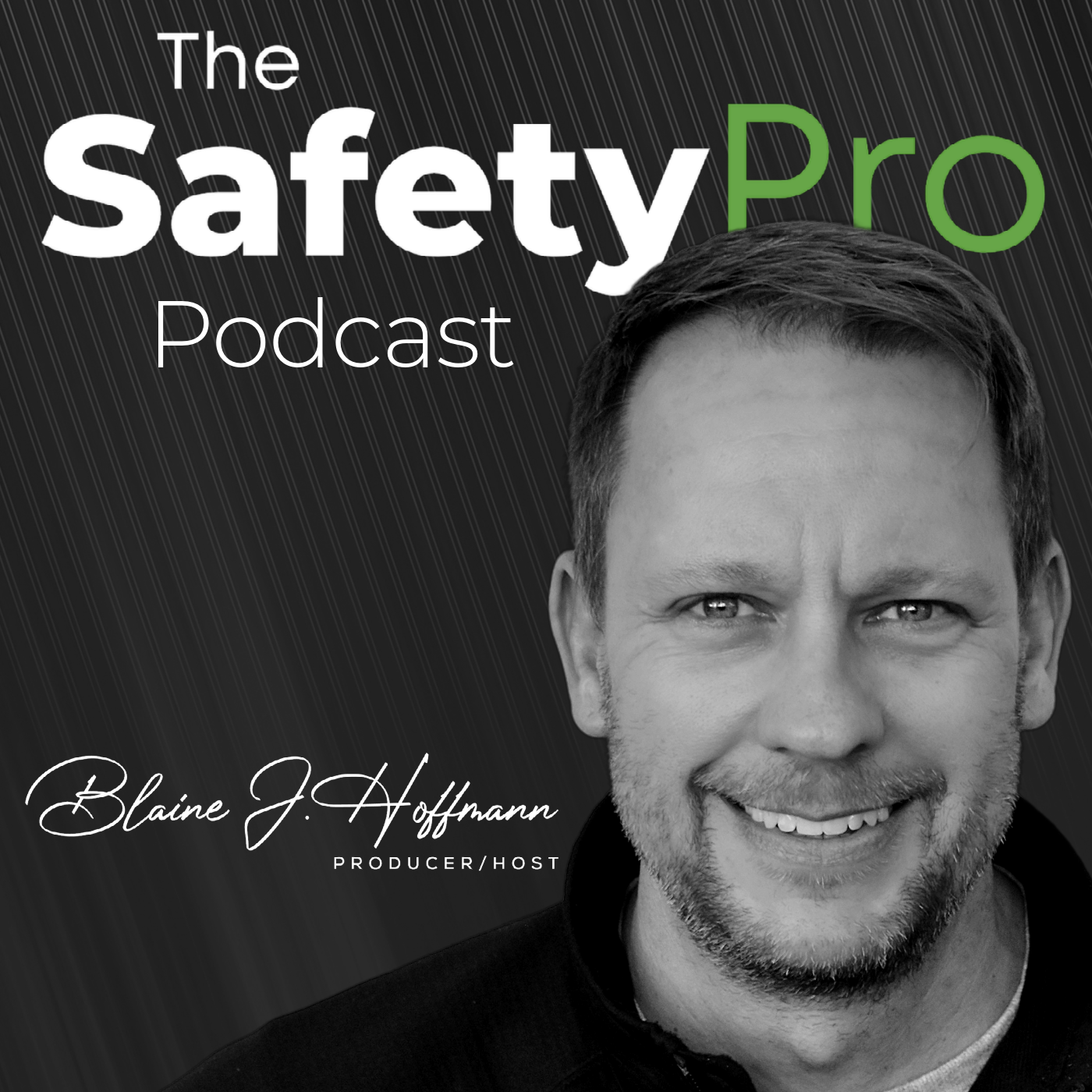
The SafetyPro Podcast
Blaine J. Hoffmann, MS OHSM

Stripe It Like It's Hot
Cam Roberts